
Karnataka Chief Minister D K Shivakumar urged the Centre to expedite statutory clearances for the Mekedatu balancing reservoir project and withdraw recommendations of the Kasturirangan report on the Western Ghats. He also requested aligning CSR initiatives with state guidelines to upgrade 1,000 government schools. These demands were made during the inauguration of CoSMOS in Mysuru, attended by Prime Minister Narendra Modi, where Shivakumar also highlighted Karnataka's contributions to space technology and the importance of decentralising scientific infrastructure.

Technopark-based space-tech startup HEX20 has been selected by the UAE Space Agency to develop a spacecraft for an asteroid probe, marking the first time an Indian private company has been chosen for a deep-space mission by the Gulf nation. HEX20 is contributing its expertise in developing the spacecraft bus and software for the Emirates Mission to the Asteroid Belt, which is scheduled for launch in March 2028 to study asteroid 269 Justitia.

There is no answer to the question of how IN-SPACe invited EOIs for ISRO's mature rockets and whether it was based on any government policy decision.

India's indigenous NavIC regional navigation system has been significantly bolstered by ISRO's successful launch of the NVS-03 satellite.

'The Indian private space sector is no longer a high-risk bet; it is a highly bankable, globally competitive asset class capable of easing the global small satellite launch bottleneck.'
Odisha-based Serendipity Space successfully demonstrated drug crystallisation processes on a satellite prototype in a near-space mission. This breakthrough aims to enable pharmaceutical manufacturing in low Earth orbit, leveraging microgravity to create superior drug crystal structures for enhanced solubility, stability, and effectiveness. The mission tested core technologies, including an autonomous pharmaceutical factory, and was inspired by advancements made on the International Space Station.

US Ambassador to India, Sergio Gor, highlighted the evolving US-India space partnership, moving from cooperation to "co-creation" at the Bengaluru Space Expo. He emphasised joint design, funding, and co-authoring the future of human discovery, citing the NISAR satellite and India's participation in the Artemis Accords as key examples of this growing synergy.
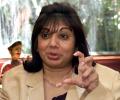
Kiran Mazumdar-Shaw, Executive Chairperson of Biocon Ltd, stated that Artificial Intelligence (AI) could drastically reduce the drug development timeline from five-to-seven years to just one or two. Speaking at the Bengaluru Tech Summit, she highlighted AI's potential to revolutionise drug discovery, clinical trials, and precision medicine, urging for regulatory frameworks to keep pace with these advancements.
Delhi-NCR has become India's leading centre for AI-enabled robotic-assisted cardiac surgeries, with 21 installations and approximately 1,800 procedures performed in 2025. Experts predict a 40 per cent rise in 2026, driven by advanced medical infrastructure and growing adoption. This minimally invasive approach offers benefits like reduced trauma and faster recovery, positioning India to potentially surpass the US in such procedures by 2031.
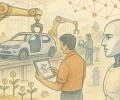
Indian companies showcased their quadruped robots at the Bengaluru Tech Summit, with General Autonomy's Param winning a race. The event highlighted India's growing capabilities in robotics and Physical AI, with robots designed for defence, industrial surveillance, and security applications.

IBM Chairman and CEO Arvind Krishna details the company's substantial annual investment in India and its global USD 10 billion commitment to quantum computing over the next five years. He addresses the potential for AI to displace 10-20 per cent of jobs, particularly in the BPO sector, while also highlighting India's significant opportunity in the AI ecosystem. Krishna urges India to accelerate AI adoption, scale existing tech initiatives, and build its semiconductor manufacturing, advocating for a light-touch approach to AI regulation and emphasizing critical thinking in an AI-driven economy.
Atomic Energy Commission chairman Ajit Kumar Mohanty stated that India is on the verge of a significant technological transformation, driven by advancements in AI, quantum technologies, and other fields. Speaking at BIT Mesra's convocation, he emphasised the need for strong indigenous capabilities, skilled professionals, and interdisciplinary collaboration to achieve a developed India. Other speakers, including BIT Mesra's Chancellor and Vice Chancellor, echoed the importance of continuous learning and contributing to national progress.

Their message is blunt: Public scientific wealth should not be transferred at what they describe as 'throwaway prices'.capability, recruitment, promotional avenues and the voice of its employees.
NIT Rourkela has announced the launch of four new academic programmes for the 2026-27 session, focusing on emerging technologies such as semiconductors, artificial intelligence, and quantum technologies.

Elon Musk's Tesla has unveiled a new Roadster capable of 'kickflipping' in mid-air using aerospace-inspired technology, showcasing a vision of flying cars and extraordinary acceleration.
Cortex DC, a company of The Chatterjee Group (TCG), announced its entry into the data centre market with plans to develop 2 GW of AI-ready capacity across India over the next seven years. The initiative aims to meet the growing demand for high-performance computing, targeting hyperscalers, cloud service providers, and advanced AI workloads with a focus on speed, scale, and sustainable power.
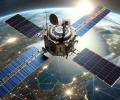
Nebex, founded by former Axiom Space executives, aims to build commercial infrastructure for the global space economy.

'Pranab-ji, had developed serious differences with P Chidambaram, and on one occasion, in 2010, I think, after expressing his frustration, he shocked me with the suggestion that perhaps it was time for a change at the top, which I understood as a hint of his long-held desire to become prime minister.'

Prime Minister Narendra Modi has announced a significant 24,000 crore Nepalese rupees development package for Nepal, further solidifying bilateral ties and launching key India-assisted projects, including a new cross-border passenger rail link between Ayodhya and Janakpur Dham. This move signals a major reset in relations after a period of strain over border disputes, with both leaders emphasising deep kinship and mutual support.
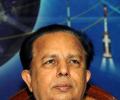
ISRO and TIFR have signed a Memorandum of Understanding to collaborate on space science, technology, and exploration, marking a significant milestone for India's space programme.

Param Foundation inaugurates 'ParSEC Whitefield', a 30,000 sq ft experiential science and innovation centre in Bengaluru, designed to engage visitors through interactive exhibits, innovation workshops and public programmes.

'It is to observe the Sun continuously that you have the Aditya L1 mission.' 'It is in a position from where it can observe the Sun continuously.'
Cisco Chairman and CEO Chuck Robbins stated that attempts to slow down AI development are futile. He emphasised that the primary focus should be on enhancing security and defensive measures to match AI's rapid advancement. Robbins also discussed the need for guardrails in AI model releases, the importance of cyber hygiene, and the balancing act between innovation and regulation, particularly for countries like India. He believes AI will not be a net job disruptor but will move people up the value chain.
The Cabinet decided to set up an Indian Institute of Space, Science and Technology at the Vikrambhai Space Centre, Thiruvananthapuram, late on Thursday night.

Students are learning to combine technology with agriculture, healthcare, biotechnology, architecture and fashion, explains Mandeep Singh, assistant professor and deputy dean, Lovely Professional University.
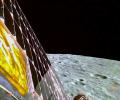
NASA has invited ISRO to join its ambitious Moon Base mission to establish a permanent lunar outpost near the Moon's South Pole, aiming for scientific discoveries and future deep space exploration. This invitation follows discussions at the Civil Space Joint Working Group meeting in Bengaluru, where both nations also advanced cooperation under the Artemis Accords and the TRUST initiative.

IIT Guwahati researchers have developed SH²RFSSM, a model inspired by how biological neurons communicate.

Abhinav Bindra, India's first individual Olympic gold medallist, reflected on the 18th anniversary of his historic win at the Beijing Olympics, stating, 'Life since has taught me that the spaces between the peaks matter just as much.'

While India's interplanetary ambitions remain significant, the current pace of financial and technical progress raises questions about whether the 2027-2028 timelines can be met.

'When a glacier collapse or a major flood event does occur, the water will simply reclaim its original path, and anything built in that path will be swept away.'
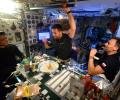
Shukla and three other crew members of the Axiom-4 mission are set to return to Earth from the International Space Station on July 14.

The question for the next 20 years is not whether India can become a $5 trillion or $10 trillion economy. Those are attractive targets, but the real question is whether India can create enough productive jobs, educate its children properly, make its cities liveable, and give hundreds of millions of people a substantially better life, asserts Ramesh Menon.

Despite aggressive expansion, India's solar power sector faces significant hurdles from rising regional disparities in installed capacity and a looming manufacturing glut due to overcapacity in domestic solar equipment production, potentially leading to consolidation and pricing pressures.

Alphabet has announced a significant leadership reshuffle within its artificial intelligence division, appointing Google DeepMind co-founder Demis Hassabis as Chief Scientist to intensify its focus on artificial general intelligence (AGI). Koray Kavukcuoglu will become Senior Vice President of Google DeepMind, overseeing Gemini development and frontier AI research. Additionally, Google veterans Jeff Dean and Sanjay Ghemawat are launching a new public benefit corporation for ML and science discoveries, supported by Google.
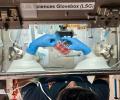
The $1.2 billion in-space manufacturing market is expected to grow and be worth more than $20 billion by 2033.

NASA astronaut Sunita Williams retires after 27 years, completing three missions aboard the International Space Station and setting numerous spaceflight records. She is currently visiting India.
The umbrella Science and Technology agreement is part of the series of pacts aimed at bringing the two countries together in areas such as health, space and information technology.

'Improved law and order and transparent governance have helped change UP's investment image.'

Scientists discover tiny whirlpool-like swirls on the Sun that could explain solar activity, improve space weather research and solve a decades-old solar mystery.

Poland's Secretary of State, Wladyslaw T Bartoszewski, has credited Prime Minister Narendra Modi with preventing Russian President Vladimir Putin from using tactical nuclear weapons in Ukraine in late 2022, highlighting Modi's significant influence on the Russian leader.
